
Fast, Reliable Attic Insulation Across Koreatown
Attic insulation in Koreatown typically runs $1,400 to $3,200 for a full retrofit, with top-up projects starting around $700. Most jobs take one day, and we answer the phone 24/7 at (626) 657-5343. If you live in a 1920s courtyard apartment near Wilshire Boulevard or a mid-rise condo off Olympic, you already know the top-floor heat problem. We do too, because we work in those buildings every week.
Koreatown’s density changes how insulation work gets done. Tight alleys, limited parking, occupied units below the attic, shared walls, and flat roofs that bake in August all shape the job. Our crews know to arrive with compact equipment, lay drop cloths through narrow hallways, and work quietly while kids nap downstairs. We serve Koreatown residents with same-day and next-day scheduling from our Los Angeles dispatch office.
Call (626) 657-5343 for a written, no-surprises estimate before anyone picks up a tool.
Why Thistledown Insulation Pasadena Is Koreatown’s Preferred Attic Insulation Company
Every Koreatown job starts with a written price. Not a range, not an estimate that drifts upward. Neil Barron, who leads Thistledown, built our process around the 365-Day Done Right Promise: if something isn’t right, we make it right, no debate. That promise carries real weight in buildings where a bad insulation retrofit means trapped heat, higher bills, and unhappy tenants.
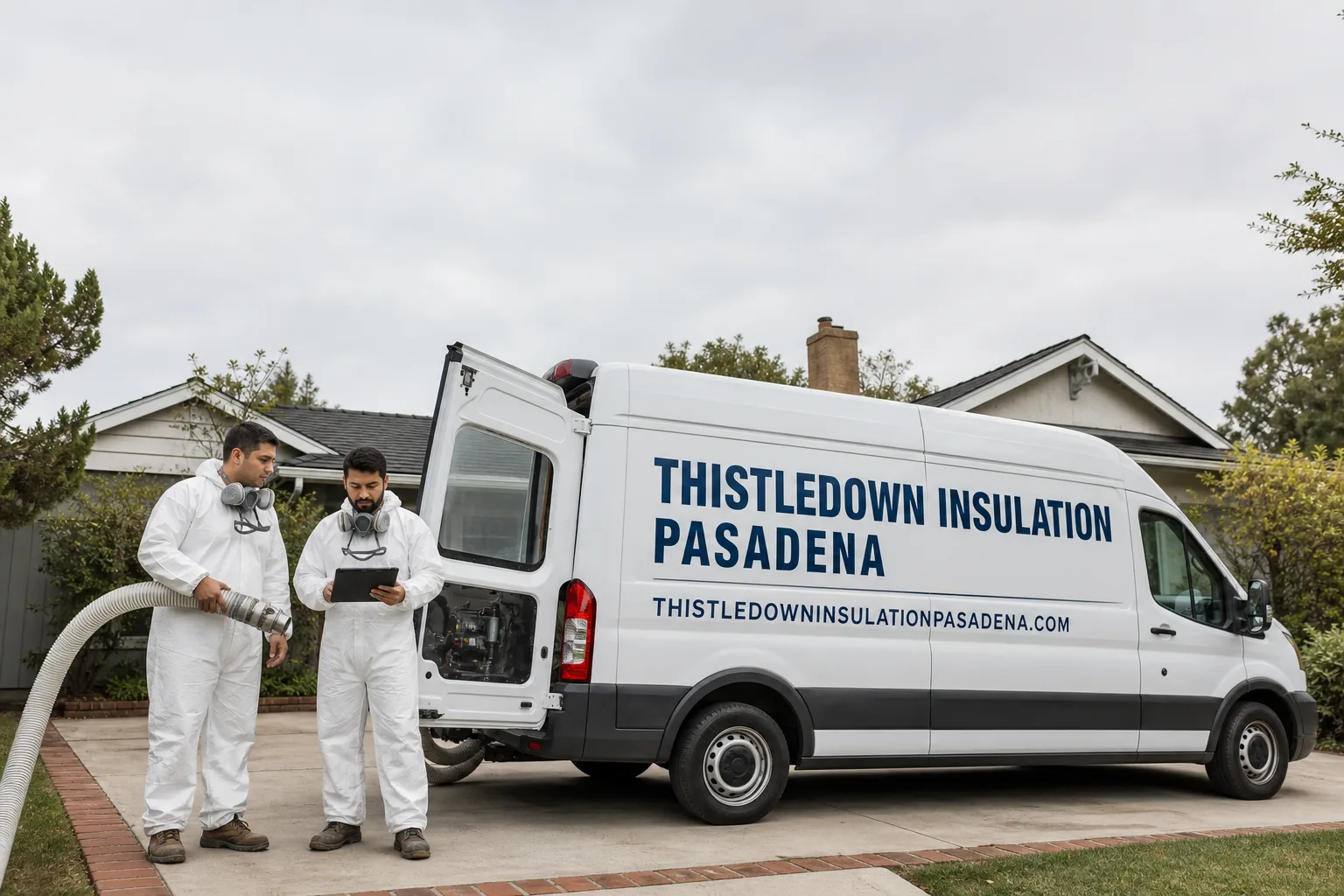
Our technicians are background-checked and uniformed. They wear shoe covers from the front door to the attic hatch and put drop cloths down across your floor before setting up equipment. We take a photo of the clean-up before the van leaves. Those practices come from the Cedarwell Care Promise, the standard every independently owned Cedarwell-family company follows. Thistledown is named for the soft fluff of the thistle, one of nature’s lightest insulators. The name is a promise about how carefully we work.
Koreatown customers call us because we understand pre-war construction. We know where the attic hatches hide in 1930s fourplexes. We know how to snake a hose through a second-floor window when the access panel is in a closet. We know that parking on Berendo or Serrano means planning ahead. That local knowledge means faster jobs and cleaner work.
Every call is answered by a live person, 24 hours a day, 7 days a week. No voicemail tree. When you call about a hot top-floor bedroom, you talk to someone who can schedule you right then.
Attic Ventilation in Koreatown
Attic ventilation in Koreatown matters more than in most Los Angeles neighborhoods because flat tar-and-gravel roofs trap heat directly above the living space. Without proper airflow, that heat sits in the attic cavity, cooking the insulation, degrading the roofing material, and pushing hot air down into top-floor units. A well-ventilated attic under a flat roof can drop upstairs temperatures by 10 to 15 degrees in summer.
Most Koreatown attics we inspect have either zero ventilation or one undersized gable vent that isn’t doing anything. Retrofitting vents into a flat-roof building requires planning: we look at the roof pitch, the parapet walls, and the attic cavity depth before recommending a solution. Typical ventilation work in Koreatown runs $500 to $1,600 depending on the vent types and the roof configuration.
Flat-Roof Venting Strategy
For flat tar-and-gravel roofs, we often pair ridge-style or mushroom cap vents with intake vents low on the parapet walls. This creates a cross-flow that pulls hot air out rather than letting it pool. Without that flow, even the best insulation underperforms.
Signs Your Attic Needs Ventilation Work
If your upstairs ceiling is hot to the touch at 4 p.m., if your AC runs constantly, or if you smell a faint tar odor in the hallway, your attic is likely not breathing. We check ventilation as part of every insulation quote in Koreatown, because insulation and airflow are one system.
Radiant Barrier in Koreatown
Radiant barrier in Koreatown is one of the highest-ROI additions for buildings with flat roofs, because it reflects radiant heat before it can soak into the attic. In a neighborhood where summer temperatures regularly hit the high 90s, that reflection matters. A radiant barrier installed under the roof deck in a top-floor Koreatown unit can cut heat gain through the ceiling by 20 to 40 percent.
The installation involves stapling a reflective foil layer to the underside of the roof rafters or roof deck. In shallow pre-war attic cavities where there’s no room for thick insulation, radiant barrier does the heavy lifting. In Koreatown, we typically recommend it alongside blown-in cellulose rather than as a standalone product. Radiant barrier installation runs $900 to $2,200 depending on attic square footage.
Where Radiant Barrier Goes in Flat-Roof Buildings
For flat tar-and-gravel roofs, we install the barrier directly under the roof deck, angled to catch heat before it transfers into the attic air. It works differently than in pitched attics, where the barrier goes on the underside of the rafters. Our crews know the flat-roof application because Koreatown is full of them.
Pairing Radiant Barrier with Insulation
The barrier stops radiant heat; insulation slows conductive heat. Together they handle both mechanisms. In Koreatown top-floor units, we commonly see customers choose blown-in fiberglass plus a radiant barrier and get cooling bill reductions you can feel the first month.
Interested in how radiant barrier fits into your full Attic Insulation plan? Call us and we’ll explain it in plain English.
Trusted Brands We Service in Koreatown
We install and service Owens Corning, Johns Manville, and Rockwool products, matched to each attic and each family. Blown-in projects tend to favor Owens Corning fiberglass or Johns Manville Climate Pro. Rockwool batts are our go-to for acoustic separation between units in shared-wall Koreatown buildings. We stock common materials locally, so most Koreatown projects start within a few days of the written quote. You’ll know exactly which brand and product goes near your family before we start.
Common Attic Insulation Problems We See in Koreatown Homes
- Shallow attic cavities in 1920s courtyard buildings. Pre-war wood-frame construction leaves very little room for standard batt depth, so fiberglass batts get compressed and lose R-value. Blown-in cellulose or fiberglass fills those irregular cavities properly.
- Flat tar-and-gravel roofs amplifying summer heat. These roofs absorb sun all day and radiate heat into the attic space below. Without insulation and radiant barrier, top-floor units become uninhabitable by mid-afternoon.
- Old knob-and-tube wiring in shared attic spaces. Many Koreatown buildings built before 1950 still have original wiring in the attic. Blowing insulation over it can create a fire hazard if the wiring hasn’t been properly decommissioned or protected. We always check before we blow.
- Unsealed plumbing chases between units. In multi-unit buildings, plumbing runs through shared walls and attic spaces with gaps around the pipes. Those gaps leak conditioned air and let sound travel between apartments. We seal them as part of any retrofit.
Pricing for Attic Insulation in Koreatown, CA
Attic insulation in Koreatown typically runs $1,400 to $3,200 for a full retrofit of a standard apartment or condo attic. Top-up projects, where we add blown-in material over existing insulation, run $700 to $1,400. Attic ventilation work runs $500 to $1,600. Radiant barrier installation runs $900 to $2,200. Removal of old insulation, when needed, adds $400 to $900.
What drives the price in Koreatown specifically: attic access difficulty, whether the building is occupied during the work, the condition of existing ventilation, and the square footage of the attic cavity. Every quote includes the exact product, the exact R-value, and the exact total. You’ll have that number in writing before any work starts. Call (626) 657-5343 for a free, no-pressure estimate.
We Also Serve Cities Near Koreatown
Our Attic Insulation in Koreatown crews also respond to calls in Pasadena, Burbank, East Los Angeles, and Baldwin Park. The same written pricing, the same shoe-cover-and-drop-cloth standard, the same live-person phone answer. Call (626) 657-5343 and tell us where you are; we’ll get you on the schedule.
Serving Koreatown, CA - Our Local Coverage Area
We’re based in the Koreatown area and know this community well. Use the map below to see our service coverage - if you’re nearby, we can almost certainly help.
FAQs About Attic Insulation in Koreatown
Attic insulation under a flat tar-and-gravel roof slows the transfer of heat from the roof surface into your living space. The tar and gravel absorb sun all day and radiate heat downward, and insulation plus a radiant barrier is the only practical defense. In Koreatown top-floor units, we routinely see cooling loads drop 20 to 40 percent after a proper retrofit. Call (626) 657-5343 for an exact quote on your building.
Yes. In most Koreatown courtyard buildings, the attic is reachable through a central hatch or from the top-floor hallway, so we don’t need to enter other tenants’ units. We use quiet tools, lay drop cloths down the hallway we do use, and coordinate timing with building management so work happens during reasonable hours. The crew leader will walk you through the access plan before we start.
Blown-in cellulose or blown-in fiberglass works best for shallow attic cavities in lath-and-plaster Koreatown buildings, because the material fills irregular spaces without compressing or leaving gaps. Rockwool batts are also useful where acoustic separation between units matters. We matched the product to the cavity shape, not the other way around.
Yes, Los Angeles Title 24 energy standards apply whenever insulation is added to an existing building, including Koreatown’s pre-war apartment stock. The work typically requires a permit, and the installed R-value must meet current minimums. We handle the paperwork and coordinate with your building manager. Call (626) 657-5343 and we’ll explain the exact requirements for your building type.
We plan for it. Our crews arrive in compact vehicles, coordinate loading zones with management, and carry equipment in through the shortest path. For buildings with alley access or a tight courtyard entry, we’ll do a quick site note before the job so the day-of goes smoothly. We’ve done enough jobs off Western and Vermont to know the drill.
Written by Neil Barron, who leads Thistledown Insulation Pasadena, serving Koreatown with attic insulation since 2003.