
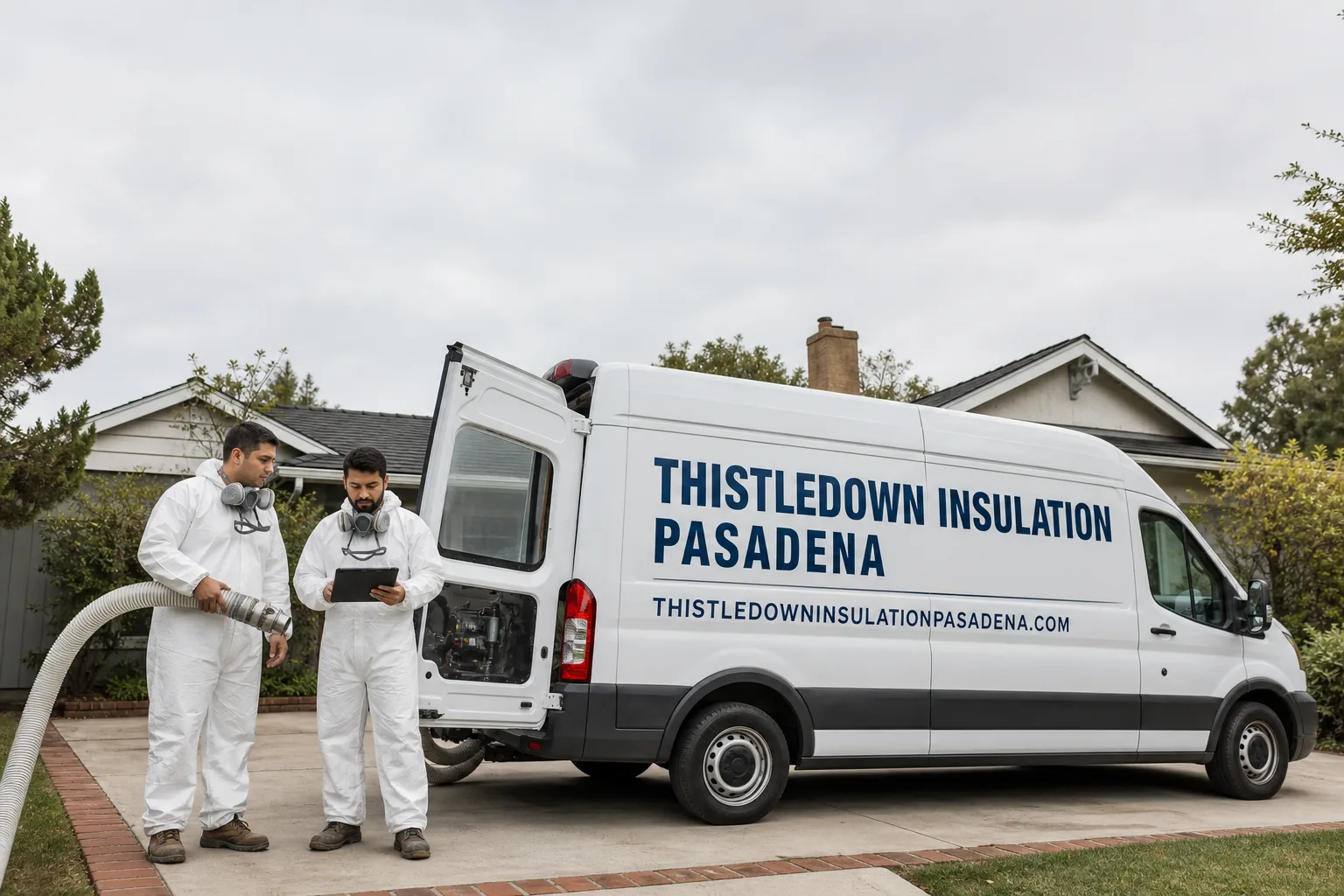
Fast, Reliable Spray Foam Insulation Across Koreatown
Spray foam insulation in Koreatown typically costs $2,400 – $6,800 depending on the area covered, and our crews reach most Koreatown addresses the same week you call. We know the buildings here: 1920s courtyard apartments along South Harvard Boulevard, mid-rise condos near Wilshire, older wood-frame fourplexes off 6th Street. That matters because spray foam on a flat-roofed top-floor unit is a different job than spray foam in a newer garage. Call (626) 657-5343 and you’ll get a real person who can talk through what your building actually needs.
Why Thistledown Insulation Pasadena Is Koreatown’s Preferred Spray Foam Insulation Company
Koreatown property owners hire us because we treat occupied multi-unit buildings with the care the situation demands. Neil Barron, who leads our team, has spent years working with the specific retrofit challenges Koreatown’s housing stock presents. We lay drop cloths across hallways, wear shoe covers from the front door to the attic hatch, and ask before we move anything in a tenant’s unit. That’s the Cedarwell Care Promise, and it’s not optional on any job we run.
We’re an independently owned Cedarwell-family company founded in 2003. Every technician who walks into your building is background-checked and uniformed, so property managers and tenants both know exactly who’s upstairs. Our 365-Day Done Right Promise means if the foam doesn’t perform as specified, we make it right. No debate, no fine print. And before any work starts, you’ll have a written price, not a ballpark range that drifts after we open the walls.
Calls to (626) 657-5343 are answered by a live person 24 hours a day, 7 days a week. Not a voicemail tree. When a Koreatown building owner calls at 9pm about a top-floor unit that’s baking, they talk to someone who can schedule a real assessment.
Garage Spray Foam Insulation in Koreatown
Garage Spray Foam Insulation in Koreatown usually addresses a shared wall or ceiling between a garage and living space, a common condition in the area’s older wood-frame buildings where garages sit under bedrooms or beside ground-floor units. Many Koreatown garages were never insulated at all. The wall between the garage and the unit above is just studs and lath, so engine heat, exhaust fumes, and street noise bleed straight into the living space.
For a typical single-car garage ceiling or shared wall in Koreatown, you’re looking at $1,200 – $2,600 for closed-cell foam at 2 inches. A detached two-car garage with multiple walls and a ceiling runs $3,000 – $5,500. The foam seals the band joist and any penetrations where electrical conduits or plumbing pass through, which is where most air leakage happens in these older garages. We get the number to you in writing before anyone picks up a spray gun.
Shared Walls and Fire Separation
Koreatown’s older garages often share walls with adjacent units, which brings fire code and acoustic concerns into the same job. Closed-cell foam adds an air barrier while helping meet LA’s separation requirements when installed with the required thermal barrier. We coordinate with building managers on occupied buildings so work happens without disrupting tenants more than necessary.
Conversions and Hobby Spaces
When a Koreatown homeowner converts a garage into a workspace, music room, or guest suite, open-cell foam on the ceiling and walls makes the space usable year-round. Open-cell runs $1.50 – $2.50 per board foot installed, and for a typical 400-square-foot garage conversion, budgets of $2,800 – $4,200 cover walls and ceiling. We’ll match the right foam to the specific use, moisture exposure, and budget for that garage.
Closed Cell Spray Foam Insulation in Koreatown
Closed Cell Spray Foam Insulation in Koreatown runs $1.75 – $3.25 per board foot installed, and for most retrofits here, it’s the material we recommend first. The reason is structural: Koreatown’s 1920s – 1940s wood-frame buildings need an insulation that adds racking strength, blocks moisture vapor, and creates a continuous air barrier in one application. Open-cell can’t do all three. On a top-floor unit under a flat tar-and-gravel roof, closed-cell is almost always the right call.
A typical Koreatown top-floor retrofit covering 800 – 1,200 square feet of roof deck or attic floor runs $4,500 – $7,200. We spray directly against the roof sheathing or between rafter bays, which stops the radiant heat transfer that makes August afternoons brutal in these upper units. Demilec’s high-lift closed-cell formula handles 2×6 bays in one pass, which matters when we’ve cut access through a hallway ceiling and the tenant is downstairs waiting for us to finish.
Roof Deck Applications on Flat Roofs
Koreatown’s flat tar-and-gravel roofs absorb heat all day and radiate it into the rooms below all night. Closed-cell foam under the roof deck converts that hot surface into a sealed, insulated plane. We’ve measured afternoon ceiling temperatures drop noticeably in the first week after install on South Harvard Boulevard, South Normandie Avenue, and similar blocks with dense courtyard housing.
Party Wall Sound Control
Shared walls in Koreatown’s courtyard apartments transmit sound through framing, electrical boxes, and baseboard gaps. Poorly mixed closed-cell foam on these party walls leaves gaps that let sound through. We spray continuous passes across studs, plates, and outlets, which stops most airborne sound transfer between units. For property owners dealing with tenant noise complaints, this is often the retrofit that finally resolves them.
Trusted Brands We Service in Koreatown
We install Johns Manville, Knauf, and CertainTeed spray foam and insulation products, chosen for how they perform in Koreatown’s specific building types. Closed-cell formulas from Johns Manville give us the compressive strength older roof decks need. Knauf’s open-cell product works well for interior partition walls where sound control matters more than moisture resistance. CertainTeed’s fiberglass and foam lines give Koreatown homeowners a mid-budget option that still performs on top-floor units. Because we install multiple brands, we match the product to the building rather than forcing one system onto every job. For Koreatown customers, that means the right foam on a 1930s lath-and-plaster ceiling is not automatically the same foam we’d spray in a 1990s condo.
Common Spray Foam Insulation Problems We See in Koreatown Homes
- Foam adhesion failure on lath-and-plaster ceilings. Old plaster keys loosen over decades, and spray foam’s adhesion stress can pull the plaster down. We check plaster condition before spraying and recommend remediation where needed before the foam goes up.
- Trapped moisture under flat tar-and-gravel roofs. Open-cell foam on a top-floor unit’s roofline can hold water from a roof leak, hiding wood rot until a stain shows on the ceiling. On these roofs, we almost always specify closed-cell foam or a ventilated assembly.
- Incomplete air barrier on shared party walls. Courtyard apartment walls leak sound through electrical outlets, baseboards, and framing gaps. If the foam isn’t applied continuously across these penetrations, the sound problem persists and the owner paid for a partial fix.
- Overspray and cleanup in occupied buildings. Spray foam dust and overspray on tenant belongings is a real risk in buildings where people live during the job. Our crew masks, covers, and cleans with the same care on the tenth floor as the first.
Pricing for Spray Foam Insulation in Koreatown, CA
Garage spray foam in Koreatown runs $1,200 – $5,500 depending on garage size and whether walls, ceilings, or both need coverage. Closed-cell roof deck work for a top-floor unit runs $4,500 – $7,200 for 800 – 1,200 square feet. Small rim joist or band joist jobs start around $900. Open-cell interior partitions for sound control run $1.50 – $2.50 per board foot installed.
What changes the number: accessibility to the attic or roof deck, the condition of existing framing and plaster, how many penetrations need sealing, and whether tenants will be present during the work. You’ll get your exact written price before we start, never after. Call (626) 657-5343 for a free estimate. We’ll walk the building with you and explain exactly what we’d do and what it costs.
We Also Serve Cities Near Koreatown
Beyond Koreatown, our Spray Foam Insulation crews work throughout the surrounding communities: Pasadena, Burbank, East Los Angeles, and Baldwin Park. If your property sits just outside Koreatown’s boundaries, the same team, same pricing approach, and same written-before-we-start guarantee apply.
Serving Koreatown, CA - Our Local Coverage Area
We’re based in the Koreatown area and know this community well. Use the map below to see our service coverage - if you’re nearby, we can almost certainly help.
FAQs About Spray Foam Insulation in Koreatown
Closed-cell spray foam directly under the roof deck stops radiant heat from a flat tar-and-gravel roof from entering the unit below. That’s why we recommend closed-cell for most Koreatown top-floor retrofits: it creates a sealed thermal break where the heat enters, rather than just slowing it at the ceiling. Expect top-floor bedroom temperatures to drop 6 – 10 degrees in summer after a proper roof-deck spray. Call (626) 657-5343 for an assessment of your specific building.
Yes, in most cases. The work happens from the attic side, a hallway access point, or the garage, not inside living spaces. Tenants can stay in their units during the job. We use low-odor formulas when appropriate, run quiet tools during nap hours, and clean the work area before we leave. For occupied buildings, closed-cell foam cures fast enough that tenants aren’t displaced overnight.
Open-cell foam performs better for airborne sound control between units because its softer structure absorbs sound waves rather than reflecting them. For party walls in Koreatown’s courtyard buildings, we typically recommend open-cell spray foam in stud cavities plus acoustic caulk at baseboards and outlets. That combination addresses both the cavity resonance and the air leaks that carry sound. For walls where moisture is also a concern, closed-cell with a sound-dampening layer is the alternative.
Closed-cell foam does not absorb water, so a roof leak runs along the foam surface and shows up as a stain at a seam or penetration rather than soaking into the insulation. Open-cell foam can hold moisture and hide wood rot, which is why we rarely recommend it under Koreatown’s flat tar-and-gravel roofs. If your flat roof has a known leak history, we’ll discuss repairing the roof membrane before the foam goes in. Call (626) 657-5343 and we’ll walk you through what makes sense for your building.
For walls, spray foam gives you an air barrier plus insulation; blown-in gives you insulation only. In Koreatown’s older buildings, the air leakage through lath-and-plaster walls and unsealed penetrations is often the bigger problem than lack of R-value. Spray foam seals those leaks and insulates in one step. Blown-in is typically cheaper per square foot but leaves the air leaks active. For top-floor units under flat roofs, spray foam is the better performer for the heat gain pattern Koreatown buildings experience.
If you own or manage a building in Koreatown and you’re weighing spray foam options, call (626) 657-5343. We’ll schedule a walkthrough, give you a written price before any work starts, and treat your tenants, your building, and your budget with the same care we’d bring to our own home.
Written by Neil Barron, Owner at Thistledown Insulation Pasadena, serving Koreatown and surrounding communities with the Cedarwell Care Promise since 2003.